A Practical Guide to CRM and ERP Integration for Better Business Efficiency
Many businesses struggle not because their teams lack skill, but because critical information is scattered across systems that don’t communicate with each other. Sales teams check data manually, finance verifies invoices from different sources, and warehouse staff maintain separate stock records. When workflows operate in silos, business performance becomes fragmented and difficult to scale. This is why CRM ERP integration is essential for strengthening collaboration and improving operational efficiency across departments.
With proper integration, processes from quotation to invoicing can move seamlessly as a unified workflow. This article explains the hidden costs of disconnected systems, the real impact of inaccurate stock data, the benefits of unified customer visibility, and the practical steps needed to implement CRM and ERP integration successfully.
Analyzing the Hidden Costs of Disconnected Systems
When CRM and ERP run separately, companies often overlook the hidden costs that accumulate over time. Duplicate data entry forces teams to repeat the same tasks and increases the risk of human errors. Manual workflows slow down operations due to the lack of automation that should streamline decision-making. Eventually, more time is spent on administrative tasks instead of revenue-generating activities.
How Inaccurate Stock Data Leads to Lost Sales
One of the biggest pain points of non-integrated systems appears in the sales cycle. Sales teams may assume stock is available based on outdated CRM information, while the ERP system shows a different status. When customers are promised items that aren’t actually available, transactions fall through and trust is damaged. This scenario is common and often results in avoidable financial losses.
Integration Solution: Automating Workflow from Quotation to Invoicing
Through CRM ERP integration, the entire business flow becomes automated from quotation to invoicing. Sales teams can access real-time stock data from the ERP directly within the CRM, eliminating incorrect commitments to customers. Once a deal is closed, the system automatically generates an invoice without additional manual input. What used to be a fragmented process becomes a fast, accurate, and fully synchronized workflow.
Key Benefit: Gaining a 360-Degree View of Customer Data
A connected CRM and ERP system allows all departments to access unified customer records. Sales can check transaction history, finance can monitor payments, and warehouse teams can prepare stock based on accurate demand. This 360-degree visibility enhances cross-department collaboration and enables the company to deliver faster, more responsive customer service.

Measuring Outcomes: How Integration Reduces Human Error
One of the most noticeable improvements from integration is the significant reduction in manual data entry errors. With automation, data is entered once and instantly shared across systems, drastically reducing inconsistencies. This improves accuracy across the entire operational chain and allows teams to focus on strategic tasks instead of correcting errors.
Best Practices: Ensuring Your ERP System (like Odoo) Communicates with Your CRM
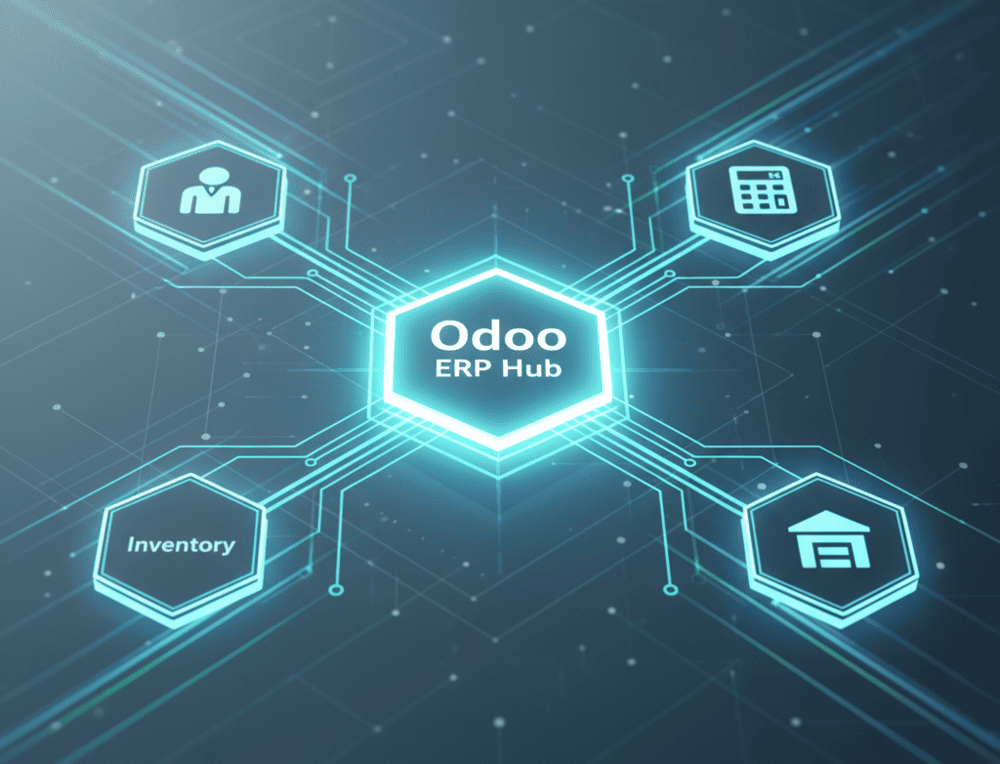
To achieve optimal results, businesses must prepare both the technical foundation and internal workflows before implementing integration. Ensure the data structure between CRM and ERP is compatible so both systems can communicate without friction. Internal processes also need adjustment so teams can follow new automated workflows effectively, especially when using modular platforms such as Odoo ERP.
Checklist for Choosing the Right Integration Partner
CRM and ERP integration requires a partner with strong technical capabilities and experience in handling complex business systems. Choose a consultant with a proven track record in similar integration projects and deep understanding of ERP architecture such as Odoo. Ensure they provide ongoing support with transparent cost structures for a smooth implementation and post-go-live experience.
Conclusion
CRM and ERP integration is a strategic step toward enhancing operational efficiency and improving decision-making across the organization. By eliminating the hidden costs of disconnected systems, ensuring accurate stock data, and automating key workflows, businesses can operate faster and deliver better customer experiences. With the right implementation partner, integration can be executed smoothly and deliver long-term value for business growth.
Ready to Optimize Your CRM and ERP Integration?
A strong integration strategy can accelerate sales and streamline your internal workflows with greater accuracy and automation. Smart IT provides end-to-end CRM–ERP implementation and integration services designed to make your operations more efficient and scalable. Get in touch with the Smart IT team to discuss your business requirements and discover the best solutions for building a productive, connected system.
PT SMARTIT MANTAP DIGITAL INDONESIA
Vieloft Ciputra World, Suite 10-01.
Kompleks Superblock, Ciputra World
Jl. Mayjen Sungkono No.89 Surabaya, Jawa Timur, Indonesia 60224
Telepon: +6281130576888 / +628113426391
Email: hello@smart-it.co.id
Facebook: Smart IT Indonesia
LinkedIn: Smart IT Indonesia
Instagram: smartitcoid